




Phase 01
Prepare
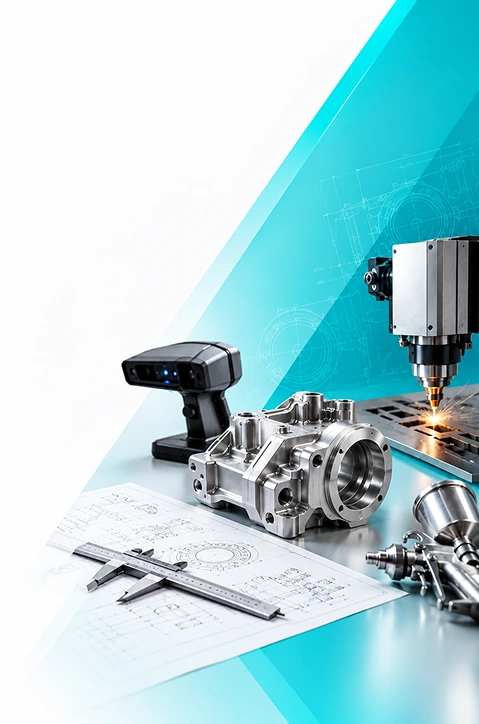
What information should I provide?
- Design intent & 3D models (STEP/IGES)
- Initial volume and annual usage
- Preferred processes & alloys
- Critical performance requirements


Explore practical answers about manufacturing processes, materials, quality, production, lead times, and working with TrinitPro.
Manufacturing decisions evolve continuously as your component transitions from conceptual CAD to scaled production batches.
Phase 01
What information should I provide?
Phase 02
Which process and material make sense?
Phase 03
How will quality be verified?
Phase 04
What affects lead time and dispatch?

Learn how material properties, manufacturability, corrosion resistance, surface requirements, and post-processing influence component design.
Manufacturing Guide
Start with the physical and functional demands of your component rather than arbitrarily locking into a manufacturing methodology.

Laser Cut / Brake Forming
Best Considered When:
TYPICAL VOLUMES: 5 – 25,000+ PCS

3 & 5-Axis Milling / Turning
Best Considered When:
TYPICAL VOLUMES: 1 – 10,000+ PCS

SLS, SLA, DMLS (Metal)
Best Considered When:
TYPICAL VOLUMES: 1 – 200 PCS

Rapid Tooling & Production
Best Considered When:
TYPICAL VOLUMES: 1,000 – 1,000,000+ PCS
Note: These are illustrative process-selection ranges, not TrinitPro capacity guarantees. Final selection depends on geometry, material, quantity, tolerances, and surface requirements.
Explore All CapabilitiesDetailed answers regarding project parameters, metrology, and delivery terms.
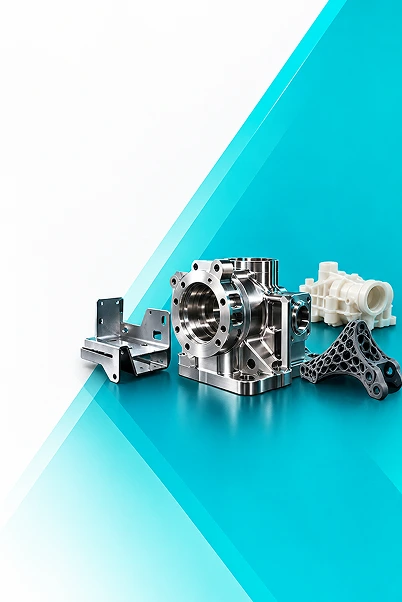
TrinitPro focuses on CNC machining, sheet metal fabrication, injection molding, and 3D printing, along with related engineering and manufacturing support. The most suitable process depends on your part geometry, material, quantity, and requirements.
Prototype and low-volume requirements can be reviewed. Share your CAD model, expected quantity, material, and intended application so the team can evaluate manufacturing feasibility and appropriate processes.
Production requirements can be discussed according to process, tooling, part complexity, material availability, and expected volume. Capacity and delivery schedules should be confirmed for each project.
A useful starting point includes a CAD model or drawing, material specifications, quantity, tolerances, required finishes, project location, expected delivery date, and any special quality requirements.
Common manufacturing exchange formats include STEP and IGES, accompanied by PDF drawings when dimensions, tolerances, or notes need to be communicated. Confirm supported file types when submitting a project.
Material selection depends on the manufacturing process and specific part requirements. Discuss the intended metal or polymer grade, strength, corrosion resistance, operating environment, and availability with the team.
Finishing requirements can be evaluated as part of the project review. Specify the desired surface appearance, roughness, coating, corrosion protection, and any applicable standard or color requirement.
Communicate critical dimensions, GD&T information, fits, and functional requirements through your manufacturing drawings. Achievable tolerances depend on geometry, material, process, and inspection method.
Inspection requirements should be defined during project review. Depending on the agreed scope, discussions may include dimensional checks, first-article inspection, material documentation, and specialized measurement reports.
Lead times depend on material procurement, design complexity, quantity, machine and tooling requirements, finishing, inspection, and shipping arrangements. Confirm the expected schedule through your quotation.
Engineering-related requirements such as CAD design support, manufacturability review, prototyping, and production preparation can be discussed with the team.
Use the Contact Us page to describe your project and share key requirements. You can also email info@trinitpro.com to initiate a discussion about your part, process, quantity, and next steps.

Tell us what you're working on. Share your project requirements and specifications, and our team will help you understand the most suitable manufacturing approach and next steps.
Get in Touch